
Table of Contents
- Why 47% of Adults Now Buy Specialty Coffee Beans Online
- Best Coffee Subscription Services 2026: What Actually Works
- Single Origin vs Blend Coffee: Which Should You Buy?
- What to Look For When You Buy Specialty Coffee Beans Online
- How to Store Specialty Coffee Beans After Delivery
- Madoli Coffee Picks for Every Brewer
- Common Mistakes When Buying Coffee Beans Online
- Frequently Asked Questions
Last Updated: September 28, 2026
Why 47% of Adults Now Buy Specialty Coffee Beans Online
Nearly half of American adults drank a specialty coffee in the past day, according to the 2026 National Coffee Data Trends Report, and that daily habit is reshaping how people shop. When you buy specialty coffee beans online, you skip the grocery aisle and get coffee shipped closer to its roast date. Madoli Coffee built its store around that idea: roast to order, ship fast, no subscription trap.
The numbers back it up.
Best Coffee Subscription Services 2026: What Actually Works
The best coffee subscription services in 2026 prioritize roast-to-order freshness and flexible billing over lock-in contracts. A subscription only works if it ships after roasting, not after warehousing, and if you can cancel without a phone call.
The three billing cycles you will actually see
- Monthly (every 4 weeks): best for one to two cups a day. A 12-ounce bag lasts most single drinkers two to three weeks, so a monthly cadence leaves a gap unless you order two bags.
- Biweekly (every 2 weeks): the sweet spot for households brewing two or more cups daily, matching the 4-to-14-day peak freshness window.
- Weekly: only worth it for espresso drinkers pulling multiple shots a day or offices. Otherwise you build a backlog that goes stale.
How to read the fine print before you enter a card
Subscription 'traps' are usually friction, not hidden fees. Check four things:
- Trial-to-paid conversion. A $5 intro box that auto-converts to a $25+ recurring charge is the most common complaint pattern. Note the conversion date.
- Pause vs. cancel. Pausing is easy on most platforms; canceling is where friction lives. Look for a self-serve cancel button. If cancellation requires an email or phone call, treat that as a red flag.
- Skip mechanics. Skipping a shipment should take one click and should not reset your billing date or forfeit a discount tier.
- Price lock. Some services raise the per-bag price after the first two shipments. Check whether the advertised price is locked or introductory.
The no-subscription alternative
If that friction sounds exhausting, skip subscriptions entirely. Madoli Coffee sells one-time purchases only, no auto-billing, no conversion date, no cancel button to hunt for. You reorder when your bag runs low, getting roast-to-order freshness without the recurring charge.
Single Origin vs Blend Coffee: Which Should You Buy?
Single origin coffee comes from one region, farm, or cooperative, while blends combine beans from multiple origins for a consistent flavor profile. Neither is better; they solve different problems.

What to Look For When You Buy Specialty Coffee Beans Online
Four things decide whether online beans arrive worth drinking: roast date, processing method, whole bean versus pre-ground, and cupping score.
| What to Check | Why It Matters | Red Flag |
|---|---|---|
| Roast date | Freshness peaks 4-14 days post-roast | No date, or "best by" only |
| Grade | Specialty requires an 80+ cupping score | No grade stated |
| Processing method | Washed, natural, honey change flavor | Method never mentioned |
| Whole bean vs ground | Whole bean holds aroma far longer | Only pre-ground offered |
How to Store Specialty Coffee Beans After Delivery
Store specialty coffee beans in an opaque, airtight container at room temperature, away from light, heat, and moisture. Skip the fridge and freezer for daily-use beans.
Container choices, ranked
- Original valve bag, rolled and clipped: fine for the first two weeks. Cheap, and the valve does real work.
- Opaque airtight canister with a one-way valve: the best daily-use option. Ceramic or stainless steel blocks light; a valve releases CO2 without admitting oxygen.
- Clear glass jar: better than nothing, but light degrades oils. Keep it in a dark cupboard.
- Vacuum canister: extends life modestly, but every open-and-reseal cycle reintroduces oxygen. Best for beans finished within a week.
The freezer question, answered properly
The freezer is not the enemy, repeated thawing is. Keep daily-use beans at room temperature; freeze only beans you will not open for two weeks or more:
- Freeze in single-use portions (a week's worth per bag) so you thaw once, not repeatedly.
- Squeeze out air and seal before freezing. Moisture and oxygen damage frozen beans.
- Let a portion come to room temperature before grinding. Grinding frozen beans is fine for espresso, but condensation on the beans is not.
- Never refreeze. Each cycle pulls moisture into the oils.
How long do specialty coffee beans stay fresh?
Whole bean coffee holds peak flavor for two to four weeks after the roast date and stays drinkable for roughly six weeks when stored properly. Grinding accelerates the clock: ground coffee stinks within days, because surface area exposed to oxygen multiplies. That is the strongest argument for buying whole bean and grinding right before brewing.
Best Sellers Sample Pack: 6Bean →
The variable most guides skip: your water
Storage protects the bean, but water determines what you taste. Brewed coffee is roughly 98% water, and its minerals extract flavor compounds from the grounds. Two things matter:
- Total dissolved solids (TDS): water that is too soft under-extracts and tastes flat; water that is too hard over-extracts and tastes chalky or bitter. The Specialty Coffee Association's target range sits around 75-125 ppm TDS for brewing.
- Chlorine and chloramine: municipal tap water carries both, and they flatten aroma. A basic carbon filter removes most of it.
Madoli Coffee Picks for Every Brewer
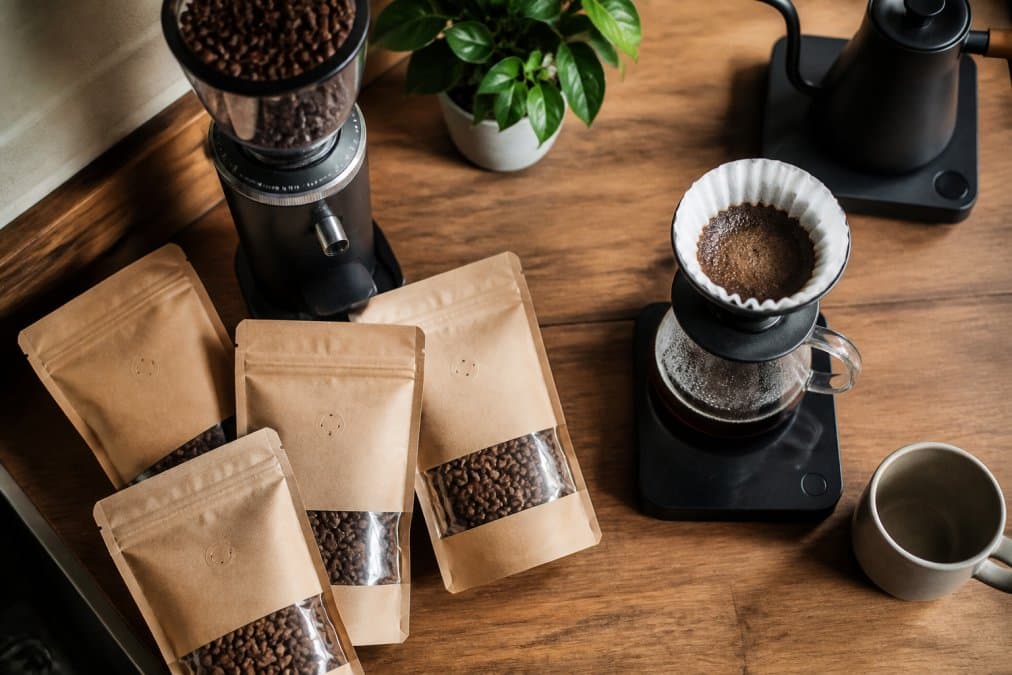
Madoli Coffee roasts to order and sells one-time purchases, not forced subscriptions, which answers the biggest objection buyers raise about online coffee. You order what you want, when you want it.
| Madoli Pick | Price | Best For | Roast Level |
|---|---|---|---|
| Best Sellers Sample Pack | $24.99 | Espresso and blend drinkers | Dark to medium |
| Single Origin Favorites Sample Pack | $24.99 | Exploring single origins | Medium to med-light |
| Whiskey Barrel Aged | $24.99 | Adventurous sippers | Roasted to order |
| Coffee with Mushrooms | $20.99 | Functional coffee drinkers | Dark or medium |
| Flavored Coffees Sample Pack | $24.99 | Flavored coffee fans | Medium |
Common Mistakes When Buying Coffee Beans Online
The biggest mistake online coffee buyers make is chasing discounts over roast dates. A cheap bag roasted eight months ago is not a bargain; it is stale coffee.
Other frequent errors:
- Buying pre-ground to save time. You trade weeks of flavor for seconds of convenience.
- Storing beans in the freezer for daily use. Condensation wrecks the oils every time you thaw and refreeze.
- Ignoring shipping speed. Beans that sit in a warehouse for a week after roasting arrive already past their peak.
- Assuming price equals quality. Grocery coffee jumped 21% year over year as of August 2025, while specialty direct-trade pricing stayed steadier, narrowing the gap in specialty's favor.
Frequently Asked Questions
Where can I buy the best specialty coffee online in 2026?
Look for roasters that print the roast date on the bag and ship within days of roasting. Specialty coffee beans hit peak flavor between 4 and 14 days after roast, so fast shipping matters more than a large catalog. Madoli Coffee roasts to order and offers sample packs at $24.99, which lets you test several origins before committing to a full bag.
How do I ensure my coffee beans are fresh when ordering online?
Check three things before you buy: a visible roast date, a one-way degassing valve on the bag, and a stated shipping window. Avoid listings that only show a best-by date. The 2026 National Coffee Data Trends report shows 47% of American adults drank specialty coffee in the past day, and freshness is the main reason they pay more than grocery store prices.
Is it better to buy coffee beans from a subscription or a roaster?
Subscriptions suit people who drink the same amount every week. One-time purchases work better if you brew irregularly or want to rotate origins. Coffee subscription services are growing at a 12.1% CAGR, but you should confirm you can pause, skip, or cancel without a fee before entering your card. Madoli Coffee sells one-time purchases, so there is no automatic billing.
What should I look for when buying coffee beans online?
Prioritize specialty grade beans, a clear roast profile, and traceable farm information such as region, altitude, and processing method. Washed, natural, and honey processes each produce different flavor profiles. Also match the roast to your equipment: medium roasts work in drip makers, while light roasts reward a burr grinder and precise brew ratios.
Do single origin beans taste better than blends?
Neither is objectively better. Single origin coffee highlights one region's terroir, like the notes of Bright Acidity, Orange, Lemon, Floral, and Effervescence in Kenyan beans. Blends combine origins for balance and consistency, which helps in espresso and milk drinks. Many home baristas keep both on hand and choose based on whether they want a distinct tasting experience or a dependable daily cup.
Coffee prices keep climbing and grocery shelves keep stocking older beans, which makes where you buy matter more than ever. Madoli Coffee roasts to order, sells single origin and blend coffees without a subscription commitment, and ships sample packs at $24.99 so you can taste before you commit. Get started with Madoli Coffee and brew a cup that actually tastes like the tasting notes on the bag.